
Category: Forklift Buying Guides
Choosing a forklift power source is not simply a choice between three engines. It affects facility infrastructure, shift planning, operator procedures, maintenance, and the evidence a buyer should request before placing an order.
OSHA groups the two main powered-industrial-truck power sources as internal combustion—including liquid petroleum gas (LPG) and diesel—and electric battery power.[1] None is automatically the right choice for every site. The correct shortlist depends on the actual load, workplace, duty cycle, charging or refueling plan, and the truck designation required for the operating area.
This guide compares electric, propane (LP gas/LPG), and diesel forklifts as procurement options. It does not replace a site safety assessment, and it does not indicate that Mingbang supplies propane or diesel trucks. Mingbang’s published forklift range is electric.
Quick comparison: what should you verify?
Use the table as a screening tool, not as a universal winner chart.
| Buyer input | Electric: verify | Propane (LP gas/LPG): verify | Diesel: verify | Evidence to request |
|---|---|---|---|---|
| Primary work area | Charging access, site electrical service, floor and route | Ventilation, permitted operating areas, cylinder handling | Outdoor or other permitted area, exhaust and noise controls | Site assessment and truck designation |
| Hours per shift | Charging windows, expected duty cycle, backup plan | Cylinder supply and safe change process | Fuel supply and safe refueling process | Duty-cycle assumptions and operating plan |
| Load and lift | Rated and residual capacity for the selected mast and attachment | Same model-specific capacity review | Same model-specific capacity review | Data plate, capacity information and configuration sheet |
| Facility changes | Charger, protected charging location and electrical work | Approved cylinder storage and handling area | Approved fuel storage/refueling arrangement | Facility plan and local requirements |
| Maintenance | Battery, charger, electrical and hydraulic scope | Engine, fuel system, exhaust and hydraulic scope | Engine, fuel system, exhaust and hydraulic scope | Maintenance schedule and local service plan |
| Cost comparison | Local electricity, charger and battery assumptions | Local LPG price, delivery and cylinder assumptions | Local diesel price, storage and delivery assumptions | Like-for-like TCO worksheet |
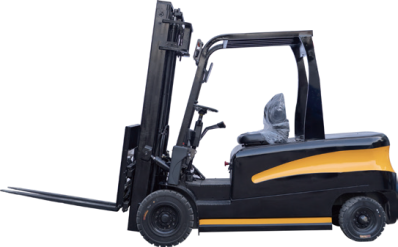
The Mingbang CPD-35 shown above is an electric forklift. It is not a propane or diesel model.
Start with the operating site—not the fuel label
A useful comparison starts with the work, not a list of generic advantages.
Document the maximum load including pallets or carriers, the load dimensions and load center, required lift height, attachments, aisle widths, doorway clearances, floor condition, grades, travel distance, temperature, and indoor/outdoor exposure. A power source cannot compensate for a truck that is incorrectly sized for the load or route.
The complete configuration matters. OSHA states that modifications or additions affecting capacity or safe operation require the manufacturer’s prior written approval and corresponding updates to capacity and instruction plates.[3] Buyers should therefore compare complete configurations—not a bare truck specification separated from its mast, forks, attachment, battery or fuel system.
If electric remains on the shortlist after the power-source review, use our separate guide on how to specify an electric forklift for the next level of load, mast, route and charging inputs.
Electric forklift: when should it remain on the shortlist?
OSHA notes that electric forklifts are commonly used indoors in warehouses and operate more quietly than internal-combustion forklifts. Electric trucks do not create internal-combustion exhaust at the point of operation, but they introduce battery-charging and handling requirements that must be managed.[2]
Investigate an electric forklift when:
- indoor air and operating noise are important site considerations;
- the facility can support the charger and electrical service required for the selected configuration;
- the working schedule includes a realistic charging window or another approved availability plan;
- the selected electric model meets the load, mast, route and grade requirements;
- local service can support the battery, charger, controller, motor, brakes and hydraulics.
Do not select a truck from a generic runtime statement. Ask the supplier to identify the battery configuration, charger requirements, assumed load, travel and lift frequency, temperature range, hours per shift, charging window, and test conditions. Battery chemistry and charging strategy are model-specific procurement questions.
Charging is also a workplace-design issue. OSHA’s electric-forklift guidance calls for designated charging areas and addresses ventilation, fire protection, charger protection, battery handling and trained personnel.[2] Some details in that guidance specifically concern lead-acid systems; buyers should confirm the actual battery technology and follow the battery and charger manufacturers’ instructions rather than applying one procedure to every system.
Propane forklift: what must the facility support?
Propane forklifts are internal-combustion trucks. OSHA notes that internal-combustion forklifts can be refueled quickly, while also requiring checks for fuel or oil leaks, worn parts and proper system operation. Indoor use may increase exposure to exhaust and noise.[4]
Investigate propane only after verifying:
- where LP-designated equipment is permitted at the site;
- ventilation and carbon-monoxide controls for indoor or enclosed work;
- approved cylinder storage, transport and change procedures;
- local cylinder supply and delivery reliability;
- trained personnel and pre-operation inspection procedures;
- maintenance support for the engine, fuel system, exhaust and hydraulics.
“Indoor/outdoor flexibility” should not be treated as blanket permission. OSHA requires the workplace to use the truck designation appropriate to the location classification, and its guidance highlights indoor-air-quality risks from internal-combustion equipment in enclosed areas.[3][5] A qualified safety professional should review site-specific requirements.
Diesel forklift: what must be evaluated?
Diesel is also an internal-combustion option. It may enter the shortlist for work areas where a specific diesel truck’s capacity, route and operating characteristics fit the job and where exhaust, noise, fuel handling and truck-designation requirements can be controlled.
Verify:
- whether the truck will operate outdoors, indoors or in confined loading areas;
- exhaust exposure and ventilation controls for every part of the route;
- fuel storage, spill control and designated refueling arrangements;
- surface condition, grades, weather exposure and required tires;
- local maintenance, parts and fuel availability;
- the exact capacity and stability of the proposed truck, mast and attachment combination.
Avoid assuming that every diesel truck lifts more than every electric truck. Capacity is a model-and-configuration question. Compare the exact data plate, load center, mast, attachment and residual-capacity information for each candidate.
Charging versus refueling: compare the whole shift
Refueling time or charger power alone does not show whether a truck will support production. Build a shift profile using:
- hours per shift and shifts per day;
- percentage of travel, lifting, waiting and idle time;
- typical and maximum load;
- travel distance, grades and lift frequency;
- breaks and available charging or refueling windows;
- temperature and indoor/outdoor exposure;
- backup truck, battery, cylinder or fuel strategy;
- planned and unplanned downtime assumptions.
For electric candidates, record the facility electrical service—voltage, phase and frequency—without assuming charger compatibility. For propane and diesel candidates, record fuel delivery, storage capacity, refueling location and handling responsibilities. A supplier should review these inputs before issuing a final configuration and quote.
Build a local TCO worksheet instead of copying a universal number
A defensible total-cost-of-ownership comparison uses local prices and like-for-like trucks. Start with:
TCO = purchase and import cost + charging or refueling infrastructure + energy or fuel + scheduled maintenance + unscheduled repair + labor + downtime + required facility changes − residual value
Use the same planning period and annual operating hours for every candidate. Record the source and date for local electricity, propane and diesel prices. Request model-specific maintenance schedules, battery or fuel-system replacement assumptions, charger or storage requirements, warranty scope, parts availability and local labor rates.
Do not assume electric is always cheaper, propane always faster to support, or diesel always more productive. The result changes with utilization, site infrastructure, local energy prices, maintenance support, financing, import cost and downtime. If a supplier cannot show the assumptions behind a savings claim, do not use that claim in the purchasing decision.
Safety and compliance questions belong in the RFQ
Power source alone does not establish whether a forklift is suitable for a hazardous or classified location. OSHA identifies multiple designations for electric, diesel and LP trucks and requires the designation to match the location classification.[3][5]
Ask the supplier and your site safety team:
- What truck designation and documentation are required for the intended area?
- What operator training, inspection and maintenance procedures apply?
- What charging, cylinder storage or fuel-handling controls are required?
- What ventilation or exposure monitoring is needed?
- Do the mast, attachment or other changes affect capacity markings?
- Which destination-market standards or documents must be confirmed before shipment?
This article is a procurement framework, not legal, engineering or workplace-safety advice. Applicable requirements must be verified by the employer, equipment supplier and qualified local professionals.
When a Mingbang electric forklift may be a candidate
Mingbang’s published electric counterbalance range covers CPD-15, CPD-20, CPD-25, CPD-30, CPD-35 and CPD-40, with published rated-capacity classes from 1,500 to 4,000 kg (approximately 3,307 to 8,818 lb).
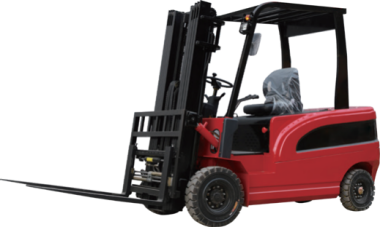
CPD-30 electric counterbalance forklift. Final battery, motor, mast and lift configuration must be reviewed for the application.
Battery capacity, motor and lift height are configuration-dependent. Lift heights up to 6,000 mm are available only for applicable configurations; this is not a standard lift height or a promise of full rated capacity at maximum elevation. Final selection depends on load center, mast, attachment, route, floor, grades, duty cycle, charging plan and site conditions.
Review the 1.5–4 ton electric counterbalance range or see the custom electric forklift configuration inputs. If you are choosing between the two adjacent higher-capacity classes, use the separate 3 ton vs. 3.5 ton electric forklift comparison.
Information to send with an electric-forklift RFQ
If the site review leaves electric on your shortlist, provide:
- maximum load weight, including pallet or carrier;
- load dimensions and load center;
- required lift height and overhead clearance;
- aisle width, doorway dimensions, floor condition and grades;
- indoor, outdoor or mixed route details;
- hours per shift, shifts per day and expected charging windows;
- facility voltage, phase and frequency;
- forks, attachments and special controls;
- quantity, destination and target date;
- destination-market documents that must be verified.
Request a reviewed electric forklift configuration. Mingbang will evaluate the available electric models and configuration inputs before quotation.
Frequently asked questions
Is an electric forklift always cheaper to operate?
No universal answer is reliable. Compare like-for-like trucks using local electricity or fuel prices, annual hours, charger or fuel infrastructure, maintenance, replacement assumptions, import costs, downtime and service support.
Can a propane forklift be used indoors?
That depends on the truck designation, workplace classification, ventilation, carbon-monoxide controls and local requirements. Do not treat “propane” alone as permission for indoor use; obtain a site-specific safety review.[4][5]
Is a diesel forklift suitable for a warehouse?
Do not decide from the fuel label alone. Evaluate the full route, enclosed areas, exhaust exposure, ventilation, noise, truck designation and site rules. Many warehouse decisions favor electric, but the actual requirement must be assessed for the workplace.[2][5]
How should charging time be compared with refueling time?
Compare the entire shift profile: operating hours, utilization, breaks, charging/refueling windows, supply infrastructure, backup strategy and downtime risk. Request model-specific assumptions instead of relying on a generic number.
Does the power source determine rated capacity?
No. Rated and residual capacity depend on the specific truck and configuration, including load center, mast and attachments. Compare the proposed data and capacity markings for each complete configuration.
Does Mingbang sell propane or diesel forklifts?
This guide provides neutral procurement context. Mingbang’s currently published forklift range is electric, covering CPD-15 through CPD-40 capacity classes.
Sources
[1] https://www.osha.gov/etools/powered-industrial-trucks/types-fundamentals/power-sources — OSHA Forklift Power Sources
[2] https://www.osha.gov/etools/powered-industrial-trucks/types-fundamentals/power-sources/electrical — OSHA Electric Forklift Power Source
[3] https://www.osha.gov/laws-regs/regulations/standardnumber/1910/1910.178 — OSHA 1910.178 Powered Industrial Trucks
[4] https://www.osha.gov/etools/powered-industrial-trucks/types-fundamentals/power-sources/internal-combustion — OSHA Internal Combustion Forklift Power Source
[5] https://www.osha.gov/etools/powered-industrial-trucks/workplace/enclosed-hazardous-areas — OSHA Enclosed and Hazardous Areas